
Our Design Approach
What are the traits or skillsets that designers, entrepreneurs, and creative thinkers will need to address a complex, rapidly changing world? There are behaviors that span disciplines, and utilize design methodologies to advance rapid change. Here are five tenets the 21st century creative thinker can use to disrupt markets and drive innovation.
Our Textbook
Design Pedagogy around the World
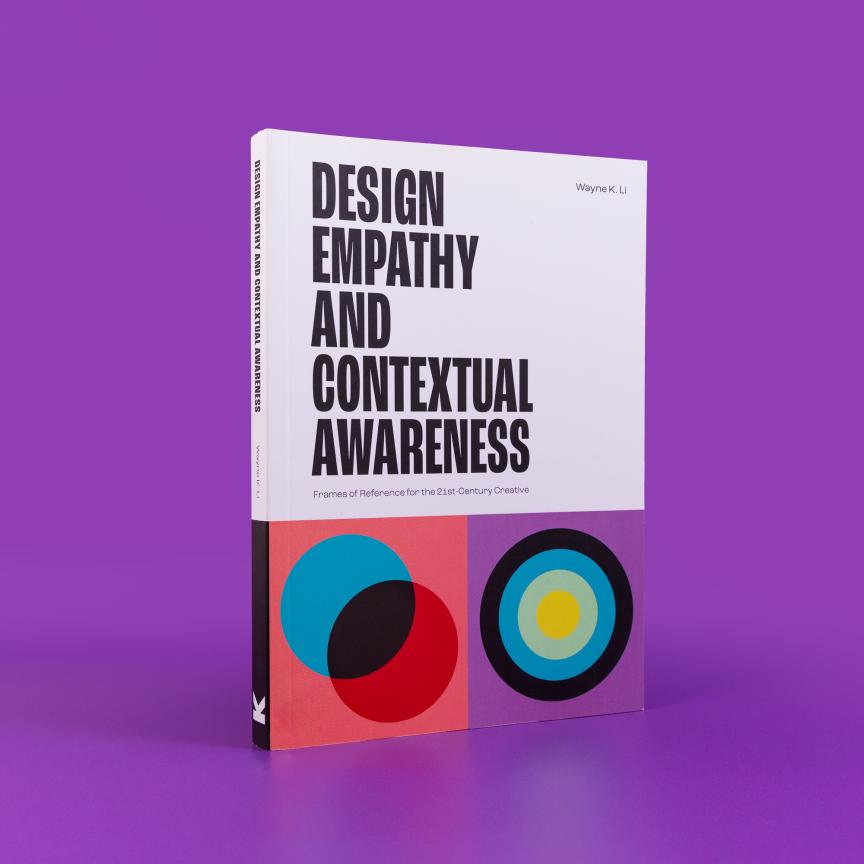
Our human-centered design textbook, which captures our first two design behaviors, empathy and contextual awareness, has been published and found global reach. From Pretoria to London, Boston to California, our work is used to teach human-centered design around the world. Design Empathy and Contextual Awareness is widely available wherever books are sold.

Design Empathy
Using cognitive, emotional and compassionate concern to design for others
“You never really understand a person until you consider things from his [or her] point of view...Until you climb inside of his skin and walk around in it.” —Atticus Finch, To Kill a Mockingbird
An open mind, tolerance for others, and a beginner’s view are critical empathic skills exhibited by the 21st century designer. Seek first to understand others different than you, rather than judge or categorize them. The ability to channel a subcultural group, “method act” their life, rather than dictate their behavior, speeds the adoption of the design.

Contextual Awareness
Complicated problems are rarely single factor.
21st-century practitioners, design thinkers, and entrepreneurs must bring a newfound attention to context and situation. Current trends in meta-thinking engage the modern designer to contemplate not what is known or seen, but the implicit, hidden forces at work. This state of inquisitive curiosity spurs innovative solutions that disrupt markets and create social impact.

Creative Craft
The relentless pursuit of "making" and "doing."
The relentless pursuit of “making” in order to foster new discovery and understanding. Learn by “doing” and “building.”
The creative confidence to bring any idea, whether it be product, environment, service, performance, policy, or business, to a realization where it can be tested against an audience. Flexible prototyping skills that matches the prototype’s fidelity and resolution appropriate to the stage of development.
Rapid Iteration
Make, Test, Learn, Repeat...
You learn more from rapid trial and error, out in the world, than you do from one glorified attempt in your office/dorm room.
Additive manufacturing, low-fidelity prototyping, agile development, and the push for flexible manufacturing all point to one main trend–Ever quicker cycles between the expression of an idea, and the solicitation of feedback from the audience. You gain more from multiple cycles made with users’ feedback than from a single, high-resolution solution.

Entrepreneurial Sustainability
Build in concert with society.
An entrepreneurial spirit seeks to find the balance between value, costs, resources, and social impact. It seeks to define new businesses and balances economic and societal needs.
For a design intervention to endure, the business model must be sustainable. Value, benefits, resources and costs must be in perfect balance. All great designers have been keenly aware of this alignment.